
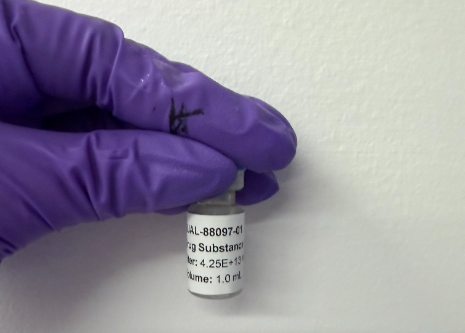
Plowshare Therapies reached an important milestone in the development of PLOW-101, its investigational gene therapy for Maple Syrup Urine Disease (MSUD). On October 21, 2026, manufacturing partner OXB vialed the PLOW-101 drug substance and diluent following its first small-scale manufacturing run.
Conducted using 2-liter bioreactors, the run represents an early development milestone known as manufacturing feasibility. This work is part of the process of advancing PLOW-101 from promising preclinical research toward a potential therapy for children affected by MSUD.
Manufacturing feasibility marks progress in developing a production process, although it does not establish that PLOW-101 is ready for clinical use or that clinical-scale manufacturing has been completed.
What Is Manufacturing Feasibility?
Developing a gene therapy involves more than demonstrating that an experimental treatment can work in a laboratory or animal model. Researchers must also establish a process capable of producing the biological material needed for further development.
Manufacturing feasibility is an early step in that process. Small-scale production runs allow development teams to evaluate manufacturing approaches before moving toward more extensive process development and testing.
What to Know About the 2-Liter Run
A 2-liter bioreactor provides a controlled environment for an early manufacturing run. Work at this scale helps inform the development of processes that may eventually need to operate under more demanding manufacturing and regulatory requirements.
This milestone represents manufacturing feasibility, but does not equate to proof of clinical readiness, commercial-scale production, or treatment effectiveness.
The Science Behind PLOW-101
MSUD is a rare inherited metabolic disorder that prevents the body from properly breaking down certain amino acids found in protein. Without effective metabolic control, toxic substances can accumulate and cause severe, potentially life-threatening complications.
PLOW-101 is designed to address two genetic forms of MSUD by delivering functional copies of the BCKDHA and BCKDHB genes using an AAV9 viral vector. The investigational approach aims to restore activity in the enzyme system responsible for processing branched-chain amino acids.
The program builds on research published in Science Translational Medicine in 2025, including encouraging findings from preclinical studies involving a calf named Petunia. Those findings provided a scientific foundation for the program, but they do not establish safety or effectiveness in humans.
Manufacturing as Part of a Larger Development Effort
Earlier in 2026, Plowshare licensed the investigational MSUD gene therapy technology from UMass Chan Medical School and selected OXB as its process-development and manufacturing partner.
Plowshare also announced that it had raised $6.7 million to support the development of PLOW-101, including manufacturing activities, preclinical toxicology, and regulatory preparation.
These efforts are intended to support the program's progression toward an Investigational New Drug (IND) application, the regulatory step required before a proposed clinical investigation can proceed in the United States.
Additional manufacturing development, testing, and regulatory work remain necessary. The first small-scale manufacturing run is one step within that larger process.
Progress With a Purpose
Plowshare Therapies was established to advance promising treatments for severe rare diseases, particularly those affecting patient populations that have historically attracted limited commercial investment.
For children and families affected by MSUD, the need for better treatment options remains urgent. Turning an investigational therapy into a medicine requires careful scientific evaluation, reliable manufacturing, regulatory review, and sustained resources.
PLOW-101 remains investigational, and its safety and effectiveness in people have not been established. The completion of this first small-scale manufacturing run, however, marks a defined step in Plowshare's continuing effort to advance the program.