
Born in October
Petunia, Plowshare, and the Science That Connects Us
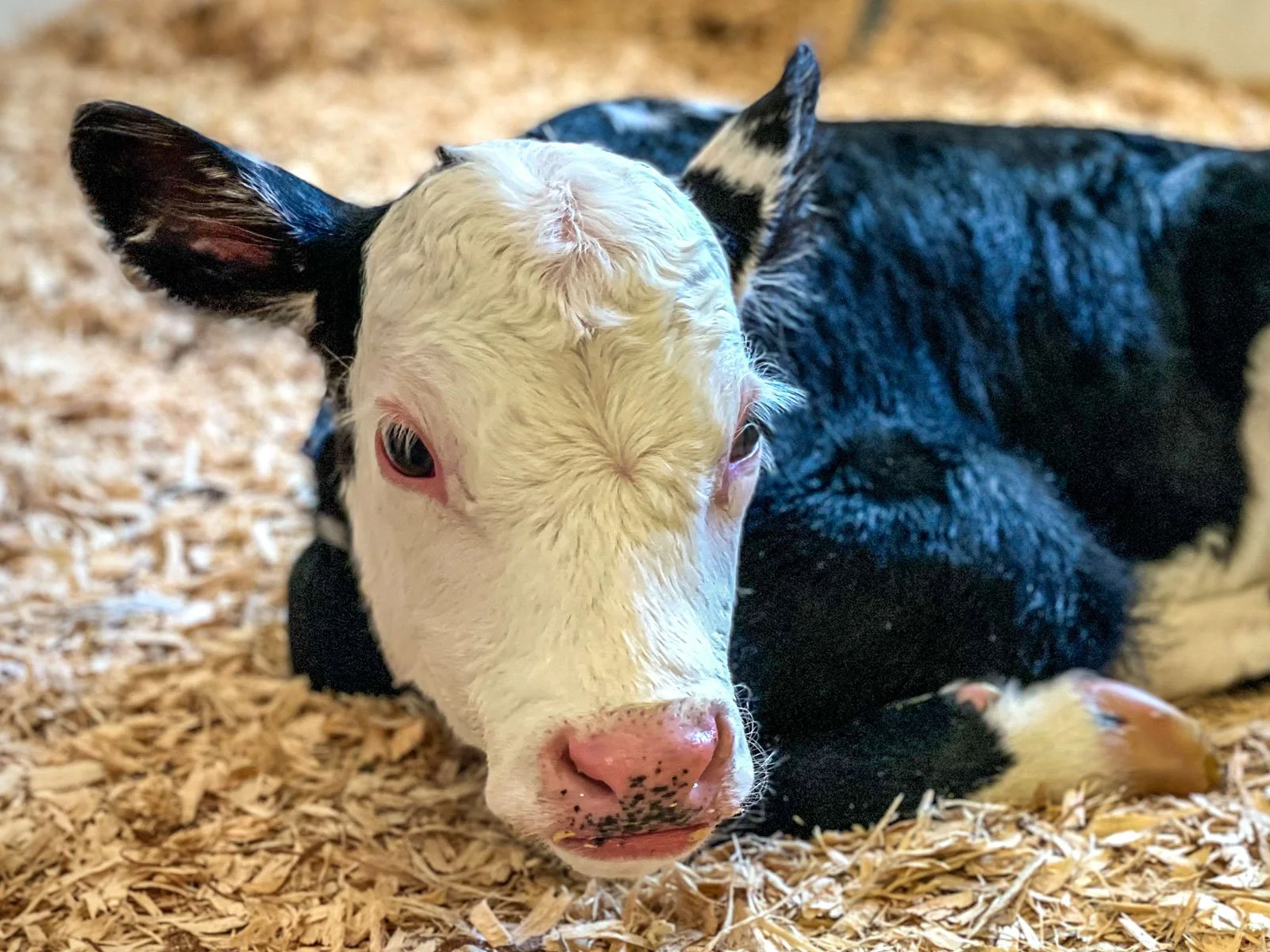
Meet Petunia, a calf born with MSUD in 2021 who, after receiving Plowshare’s gene therapy, is still alive five years later.
In October 2021, a calf with Maple Syrup Urine Disease was born into a research program trying to answer a difficult question: Could gene therapy change the course of this deadly disease?
Four years later, in October 2025, Plowshare Therapies was born with a related question of its own: Could promising science for rare diseases be carried all the way to the children and families who need it?
While the birth of a calf named Petunia and the birth of Plowshare Therapies happened four years apart, they are part of the very same story.
This October, Petunia turns five, while Plowshare celebrates its first anniversary. For a company whose lead program grew from the science tested in Petunia, the connection is worth exploring.
A calf born with MSUD
Maple Syrup Urine Disease, or MSUD, is a rare inherited metabolic disorder that prevents the body from properly breaking down certain amino acids found in protein. The disease takes its unusual name from the sweet, maple syrup-like smell that can develop in the urine of affected infants.
Without the enzymes needed to process those amino acids, toxic substances build up in the body and brain. In babies with classic MSUD, the disease can become life-threatening within days.
Treatment today can include a highly restrictive diet, frequent blood testing, careful monitoring, and emergency care during metabolic crises. Liver transplantation can provide metabolic stability, but it carries its own risks and lifelong burdens.
Petunia was born with a naturally occurring bovine form of the same disease.
Within hours, she became critically ill. Researchers reported that by 15 hours after birth, she had become lethargic, stopped eating normally, and developed problems with coordination. Untreated calves with the same form of MSUD historically died within days.
Petunia gave researchers something mice could not: a chance to see how an experimental gene therapy might work in a much larger animal with a naturally occurring form of MSUD.
At approximately 40-hours-old, after researchers had stabilized her medically, Petunia received an investigational gene therapy developed by researchers at UMass Chan Medical School in collaboration with the Clinic for Special Children and other partners.
The therapy used a gene carrier called AAV9 to deliver working copies of two genes, BCKDHA and BCKDHB. Those genes provide instructions for part of the enzyme system that people with the two most common forms of classic MSUD do not have.
The goal was simple to describe, even if it was difficult to accomplish: give Petunia’s cells enough working genetic material to restore metabolic control.
What happened next
Petunia survived.
More importantly, researchers began seeing evidence of sustained metabolic correction.
Petunia needed less of the specialized formula used to manage MSUD. By 71 days of age, she had transitioned completely to an unrestricted diet.
She continued to grow.
The scientific paper describing the work reported that Petunia grew from 36 kilograms at birth to more than 500 kilograms while maintaining stable metabolic markers and eating ordinary grain, hay, and silage.
During the weeks following treatment, she became progressively less dependent on the specialized medical formula used to manage MSUD. By 71 days of age, she had transitioned completely to an unrestricted diet.
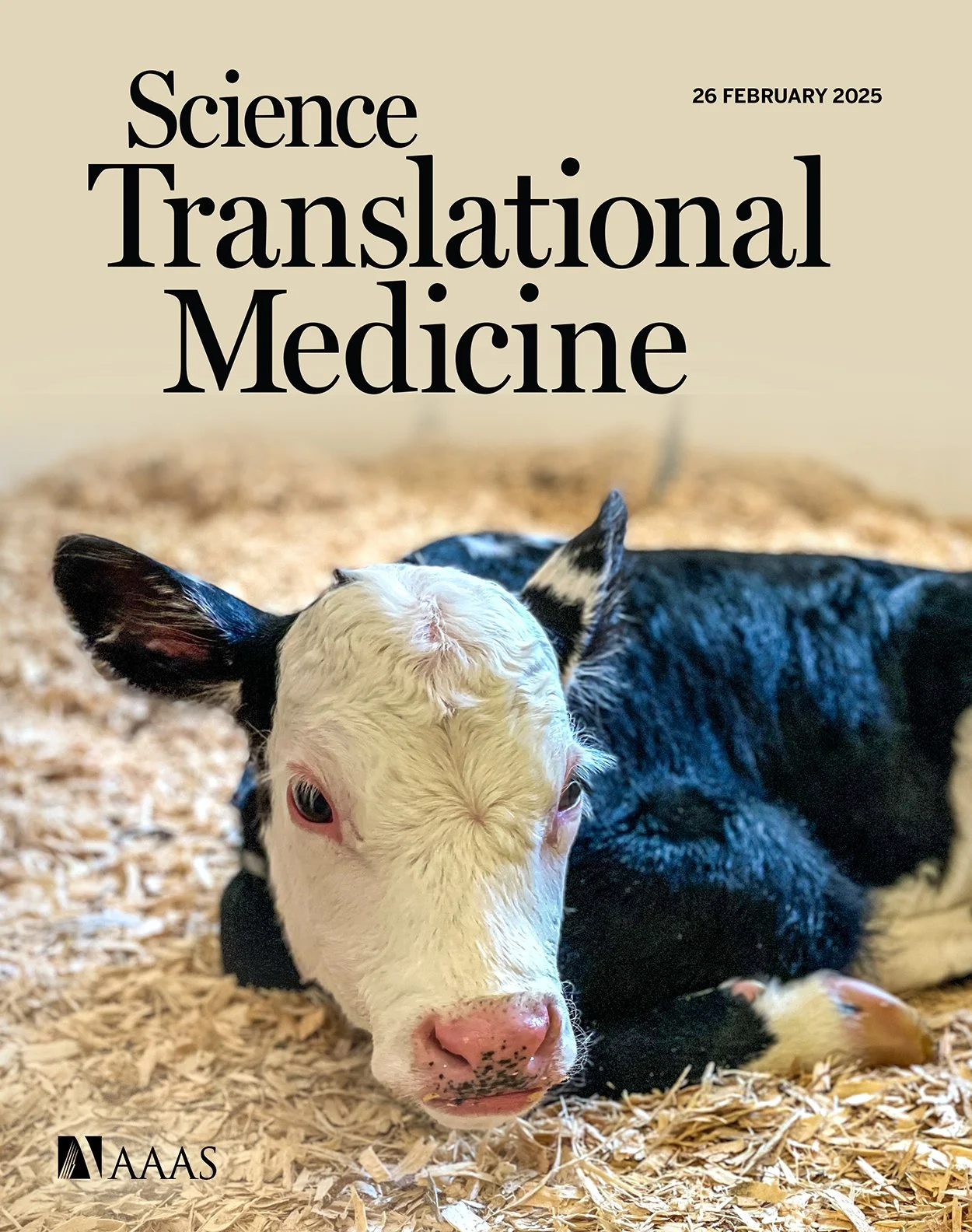
The results were significant enough to become part of a peer-reviewed study published in Science Translational Medicine in February 2025.
The research did not show that every effect of MSUD had disappeared. Brain imaging revealed abnormalities that remained even after treatment, giving researchers important information about what still needed to improve.
That is the purpose of preclinical research: to learn what works, what does not, and what must happen next.
Petunia helped answer all three questions.
Four years later, another beginning
Dr. Kevin Strauss was one of the authors of the Petunia study.
By then, he had spent more than two decades caring for children with MSUD and other rare genetic diseases at the Clinic for Special Children in Lancaster County. Those experiences placed the science in a very different context.
MSUD is rare around the world, but it is far more common among Old Order Mennonite families in Lancaster County. For Strauss and the families he served, the disease was never an abstract scientific problem. It was something they had lived with together for decades.
In October 2025, working with leaders from the Plain community, Strauss founded Plowshare Therapies.
The company grew from a problem he later described in his founder’s letter: science can advance far enough to make a new treatment possible, yet that treatment may never reach patients.
“This is not a failure of knowledge,” Strauss wrote. “It is a failure of choice.”
Petunia helped make that distinction tangible.
From knowledge to action
By the time Plowshare was founded, researchers had already shown that a dual-gene therapy could rescue a lethal form of MSUD in a large animal and produce lasting metabolic correction.
But who would carry the work forward?
Turning an experimental therapy into a medicine requires manufacturing, toxicology studies, regulatory work, clinical trials, capital, and years of disciplined development. For diseases that affect relatively few patients, the traditional drug-development system can make that path especially difficult.
Plowshare was created to take a different approach.
The company is rooted in the community most affected by MSUD and built around the idea that strong science, careful stewardship, and patient access should remain connected throughout the development process.
Petunia’s birth helped show what might be possible. Four years later, Plowshare was born to help carry that possibility forward.
From Petunia to PLOW-101
In February 2026, UMass Chan Medical School licensed the investigational MSUD gene therapy to Plowshare Therapies. That technology now forms the scientific basis for PLOW-101, Plowshare's lead gene therapy program for the two most common forms of classic MSUD.
Much work remains.
Results in animals do not prove that a therapy will be safe or effective in people. PLOW-101 must still move through manufacturing, safety testing, regulatory review, and clinical development before it could potentially become a treatment for children.
Petunia helped establish an important starting point. Her case showed that a one-time dual-gene therapy could prevent early death in a large animal with MSUD, restore metabolic control, allow an unrestricted diet, and produce effects that lasted for years.
The question Plowshare is working to answer now is whether that science can be translated safely and effectively for children.
Two birthdays and the work ahead
October 2026 marks five years since Petunia was born.
It also marks one year since the founding of Plowshare Therapies.

The timing is fitting.
Petunia’s story shows what scientific discovery can make possible. Plowshare’s story is about what happens after discovery: finding a way to move promising science through the difficult process required to turn an experimental therapy into a medicine.
Both birthdays represent a beginning.
Petunia's birth began an experiment. Plowshare's birth began an organization. Five years after one and one year after the other, the work is to connect those beginnings to something larger: a future in which children born with MSUD have a better option than the ones available to them today.